Never let a good crisis go to waste: Who do you want to become?

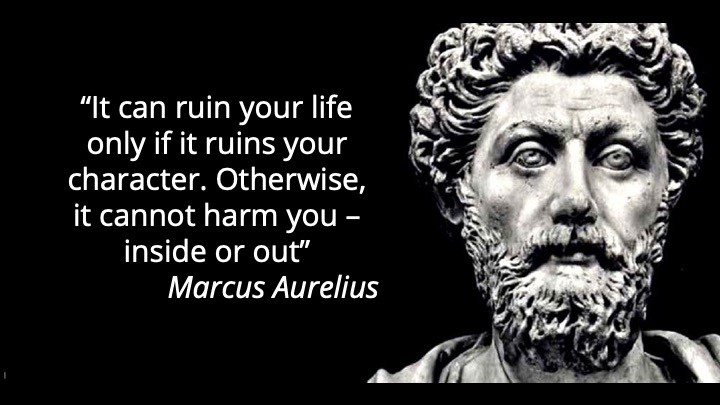
Marcus Aurelius quote "It can ruin your life only if it ruins your character. Otherwise, it cannot harm you - inside or out." Never let a good crisis go to waste: Part 2 - Who do you want to become? Crises as opportunities to (re)build our character.

Marcus Aurelius quote "It can ruin your life only if it ruins your character. Otherwise, it cannot harm you - inside or out." Never let a good crisis go to waste: Part 2 - Who do you want to become? Crises as opportunities to (re)build our character.
It can ruin your life only if it ruins your character. Otherwise it cannot harm you — inside or out. Marcus Aurelius
One of the most tangible aspects of a crisis like the one we are living is the material damage it causes: sickness, death, lost jobs, etc. There is, however, a less tangible but also very important dimension: the net balance a crisis has on our character as individuals, and the overall impact on society as a whole stemming from this.
Many phrases such as ‘adversity reveals character’, or variants of it, seem to indicate that a crisis will bring out who we truly are – and in many cases this won’t be a pretty sight. For example, in the current SARS-CoV-2 pandemic we can find dozens of stories of people who are taking advantage of the situation for their own benefit.
The flip side to this is seeing others rise to the occasion. Every tragedy brings its host of heroes, even if most of them remain unknown. Think of the first responders during 9/11, firefighters and others helping people out of crumbled buildings during an earthquake, rescue personnel saving people during floods – or, right now, thousands of healthcare workers, law enforcement personnel, food supply chain workers and countless others who are risking their lives for others.

The opportunities

We see responses ranging from the vile to the heroic and everything in between. This, however, does not prove that the type of responses we see is an inevitable result of a crisis ‘revealing the true colors of individuals’. Even under the most dire of circumstances, we all still have a choice. In other words, critical situations highly correlate with individuals showing more of who they are, but it does not invariably cause it. This might seem like word play from someone with nothing better to do than playing semantics, yet the implications are deeply profound.
Circumstances do not force me into acting one way or another (for better or worse) – I still have a choice. And what I choose has an impact on my character, every single time. Given that crises confront us with an abnormally high number of choices to make every day, we are basically on an accelerated path to build or destroy our character – and we do not have the option of choosing not to be on this path. Either by action or inaction we are doing something to our character. We are much better off by becoming aware of this and improving our choices every day.
Let’s look at this at different levels to illustrate:

At a personal level

A crisis is a perfect (and unavoidable) daily practice of how we react in the face of stress. It is an emotional gym that gives us the opportunity to ‘put in our reps’ every day. Pandemic panic shopping is making it increasingly hard to find vital supplies? This is a text-book definition of a situation to be legitimately stressed about: it can kickstart a downward spiral of fear, horror, self-pity, anger.
It’s also an opportunity to practice how to refocus my mind on what I can control and operate in that space, as limited as it might be: first rep of the day. Kids running around the house with no school – while trying to take a conference call? Check, that is very stressing – how am I going to respond to this? Second rep of the day. Sales projections are down? Third rep of the day: practice how I will manage my stress. You get the picture.
The difference with a physical gym is that here we don’t have the alternative to skip it: we are in it, and we will be putting in our reps. They can be reps in which we practice how to get more stressed, angrier, fearful… or they can be reps in which we try to give the best response we humanly can to every prompt. Every choice we make to every one of these prompts, every one of our responses, is a character building block.

At a relationship and / or family level

The lockdown half of the world is currently experiencing has resulted, amongst other things, in an impact to our relationships and / or family life. Young couples who are now living together out of necessity. Families with several generations living under the same roof while weathering out the situation. Couples in the process of getting divorced having to share the same living space, as their separation proceedings slow down or are temporarily halted. Death of loved ones. Families losing the income of one or both parents. Kids homeschooling putting an additional strain on family dynamics. Many of these scenarios can be stressing, depressing, anxiety-inducing, or worse.
If your specific current set of circumstances has made your life more complicated, how are you responding to it? Note that the question is responding to it, not how did you respond to it? This means that you have responded to it, you are still doing it, and more likely you will keep on doing it for the days and weeks and maybe months ahead. Is there a way to respond to it better? Can you address the content of the challenge (tension, grief, whatever it might be) with a better grip on your emotional response? Can you recognize the emotion in the situation, acknowledge it, but not be controlled by it?
The harder our circumstances, the harder choosing to respond to them in a constructive way can be – yet, like most other things in life, practice helps. And every day we have the opportunity to practice a better response. That practice is a way to improve our character. We’re already at the gym: might as well put in the work to come out of this stronger.

Never let a good crisis go to waste

This brings us back to the beginning. Crises bring about painful, tangible consequences. Thousands of us will not survive this pandemic – yet most will. The tragedy and grief that we have and will have for those dying is here and will be here. Let us not add to this tragedy by also losing vast amounts of human quality with the survivors’ characters deterioritating. Instead, let’s honor the departed by becoming a better version of ourselves for now and the times to come. 

Share this:

Transformación Digital y Adopción de IA

No se trata solo de adoptar tecnología — se trata de que las personas la adopten.

La mayoría de las transformaciones digitales fracasan. Las empresas invierten millones en nuevas herramientas y procesos, pero la adopción se estanca. ¿La razón? Se enfocan en la tecnología y la estrategia, mientras ignoran cómo piensan, sienten y colaboran las personas.

Nosotros comenzamos por el lado humano. Los líderes y equipos enfrentan los miedos, hábitos y dinámicas culturales que impiden la adopción. Construyen nuevas mentalidades, comportamientos y prácticas que hacen que el cambio perdure.

El resultado: Las personas adoptan nuevas herramientas. Nuevos procesos. Nuevos sistemas. Y el impacto empresarial llega de forma natural.

Una clase magistral para líderes que guían la transformación digital y de IA.

Se centra en el cambio de mentalidad necesario para liderar el cambio.

Al combinar el potencial humano con la innovación, ayuda a los líderes a construir culturas adaptativas y preparadas para el futuro.

Los gerentes y líderes de equipo deben replantear su rol en la era de la IA. Ya no se trata de controlar tareas — se trata de facilitar resultados, moldear mentalidades y crear las condiciones para que los equipos y la tecnología prosperen juntos.

Esta clase magistral ayuda a los líderes a:

  • Cambiar su mentalidad de “dueño de tareas” a “facilitador de resultados”.
  • Guiar a los equipos en la adopción de IA mediante la creación de nuevas normas y hábitos.
  • Equilibrar el uso ético de la IA con una delegación inteligente del trabajo.

El potencial de la IA no puede realizarse sin un liderazgo capaz de hacerlo realidad. Este programa está diseñado para líderes de nivel C que necesitan:

  • Desarrollar una mentalidad digital que conecte la estrategia de IA con los resultados del negocio.
  • Comprender que la cultura de trabajo y el liderazgo —no solo las herramientas— son lo que hace que la transformación perdure.
  • Liderar con claridad, equilibrando la velocidad de adopción con la ética y el valor a largo plazo.

¿Qué incluye?

– Autoevaluación: Ofrece una línea base sobre tu estilo de liderazgo y potencial de crecimiento.

– Día 1: Convertirse en un Líder Digital Consciente

– Día 2: Transformar la Cultura y la Estrategia a través de la IA

La mayoría de los empleados de primera línea deben trabajar con IA antes de sentirse realmente seguros. Este programa cierra esa brecha al dotar a los equipos de conocimientos fundamentales y habilidades prácticas para utilizar la IA en sus funciones diarias, manteniéndose siempre alineados con los valores y la toma de decisiones consciente.

¿Qué incluye?

Módulo 1: Comprender la IA en tu entorno laboral

Módulo 2: Adoptar el Liderazgo Digital Consciente

Módulo 3: Primeros pasos con herramientas de IA

Módulo 4: Integrar la IA en la práctica diaria

Formato: Módulos autoguiados + 2 sesiones virtuales facilitadas (1.5 h cada una)

Cuando las organizaciones adoptan la IA, la cultura de trabajo es el factor decisivo. Este programa ofrece a los líderes un cambio de perspectiva fundamental: prepara tu cultura de trabajo para la IA, y la adopción llegará como consecuencia.

¿Qué incluye?

– Autoevaluación: Proporciona una línea base sobre tu estilo de liderazgo y potencial de crecimiento.

– Sesiones en vivo: 7 sesiones (3 horas cada una)

– Autoguiado: 3 módulos (2 horas cada uno, opcional)

– Extras: networking, intercambio entre pares y ejercicios prácticos

Diseñado en colaboración con Duke Corporate Education para combinar rigor académico con conocimientos aplicables.

Más información.

Digital Transformation & AI Adoption

It’s not just about tech adoption – it’s about human adoption of tech

Most digital transformations fail. Companies pour millions into new tools and processes, but adoption stalls. The reason: they focus on technology and strategy while ignoring how people think, feel, and collaborate.

We start with the human side. Leaders and teams confront the fears, habits, and cultural dynamics that prevent adoption. They build new mindsets, behaviors, and practices that make change stick.

The result: People embrace new tools. New processes. New systems. And the business impact follows naturally.

A masterclass for leaders guiding digital and AI transformation.

It focuses on the shift in mindset required to lead change.

Blending human potential with innovation, it helps leaders build cultures that are adaptive and future-ready.

Managers and team leaders need to rethink their role in the age of AI. It’s no longer about controlling tasks — it’s about enabling outcomes, shaping mindsets, and creating the conditions where teams and technology can thrive together.

This masterclass helps leaders:

  • Shift their mindset from “owner of tasks” to “enabler of results.”
  • Lead teams through AI adoption by shaping new norms and habits.
  • Balance ethical use of AI with smart delegation of work.

AI potential cannot be fulfilled without leadership that knows how to make it real. This program is designed for C-level leaders who need to:

  • Develop a digital mindset that connects AI strategy with business outcomes.
  • Understand how work culture and leadership, not tools alone, make transformation stick.
  • Lead with clarity, balancing speed of adoption with ethics and long-term value.

What’s included:

– Self-Assessment: Offers a baseline for your leadership style and growth potential.

– Day 1: Becoming a Conscious Digital Leader

– Day 2: Transforming Culture & Strategy Through AI

Most frontline employees are required to work with AI before they feel truly confident. This program closes that gap by equipping teams with the foundational knowledge and practical skills to use AI in their daily roles—while staying anchored in values and conscious decision-making.

What’s included:

Module 1: Understanding AI in Your Workplace

Module 2: Embracing Conscious Digital Leadership

Module 3: Getting Started with AI Tools

Module 4: Embedding AI in Daily Practice

Format: Self-led modules + 2 facilitated virtual sessions (1.5h each)

When organizations adopt AI, work culture is the make-or-break factor. This program gives leaders a crucial shift in perspective: prepare your work culture to AI, and adoption will follow.

What’s included:

– Self-Assessment: Offers a baseline for your leadership style and growth potential.

– Live sessions: 7 sessions (3h each)

– Self-led: 3 modules  (2h each, optional)

– Extra: networking, peer exchange, and practical exercises

Co-designed with Duke Corporate Education to merge academic rigor with actionable know-how.

Learn more.